
ISBN (ISBN code). What is it and why is it needed?
ISBN (International Standard Book Number) is the international standard book number, the accounting «passport» of a book in the world database of editions. We explain what the code looks like, what its digits mean, who needs it and how the mandatory distribution of editions to the libraries of Ukraine works.
- The international standard book number
- Assigned to text editions of 40 pages or more
- Identification of a book in shops and libraries worldwide
- Mandatory distribution of copies to the libraries of Ukraine
The abbreviation ISBN stands for International Standard Book Number. It was developed by the international organisation of libraries and information centres (ICA) and adopted in 1975. The ISBN standard is the main tool for organising and cross-referencing bibliographic records around the world. In other words, it is the accounting – or, if you like, the inventory – number of every book.
The ISBN system operates all over the world, forming a huge database of every book published in every country. The standard defines the format and content of bibliographic records as well as the rules for compiling them. It also defines the format and content of the ISBN itself, which is the unique identifier of each bibliographic record. The ISBN is a key element of that record, because it makes it possible to identify and find the record anywhere in the world.
IMPORTANT: an ISBN is assigned to a text document (not to pictures or photographs) of 40 pages or more.
Who provides ISBNs?
An ISBN is needed so that a book can be identified by the international library system and by search engines. The number is printed on the relevant page of the cover or at the end of the book. Every country has one authorised representative that issues ISBNs for books published in that country. Usually this is the national book chamber.
Technically, the ISBN is issued as follows: each country is allocated its own group of numbers, which are then assigned to books by local authors.
For example, roughly speaking, one country is allocated the range from 100000000 to 200000000, another from 200000000 to 300000000, and so on.
In smaller countries such numbers may be issued by the largest book chamber. In other cases it also allocates smaller ranges of numbers within its regional block to permanently operating publishing houses. At the same time, it is not at all necessary to obtain an ISBN in your own country – it can be done in any other country.
What an ISBN looks like and what it means
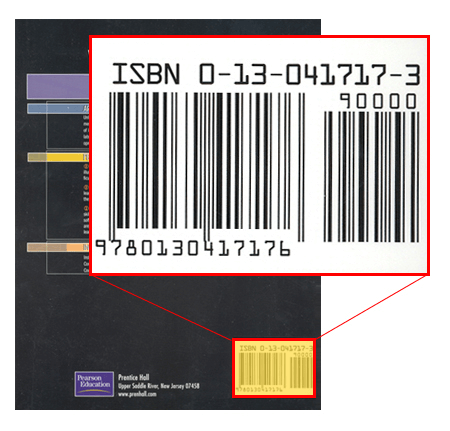
A book code looks, for example, like this: ISBN 978-617-8111-27-8. It consists of five groups of digits.
- The first group – the digits 978 or 979 – is used for barcoding books.
- The second group indicates the country or region. For example, 0 stands for the USA and other English-speaking countries.
- The third group can contain from two to seven digits and denotes the code of the publishing house.
- The fourth group (up to six digits) records the serial number of the edition.
Finally, the last group – a digit or the letter X – is the check sum, that is, a piece of technical information.
The ISBN is a necessary part of the book publishing process. It is used to track and order books and to identify them in databases and on bookshop shelves. The ISBN is also used to create links between books and other online resources, such as reviews and information about authors.
Why the ISBN matters
Why an ISBN is a useful thing may not be obvious right away. If you take writing seriously and plan to build a career in the literary field, we recommend spending the time to obtain one. This number will let you add your book to the general database of works.
- First, it will make your creation part of the world literary heritage.
- Second, it will make the book easier to find for booksellers, librarians and other specialists in the book world if they are interested in it.
If you want to distribute your book through shops, most of them will refuse to take it for sale without an ISBN and a correctly formatted title page.
However, this number, which at first glance seems necessary for absolutely every author, may simply not be needed. The main criteria are the final audience of the book and the way it is distributed. For example, you may have decided to publish your memoirs, but they are intended only for your family. Or you may have had the idea of printing a few copies of a collection of your poems to give to friends and acquaintances. Naturally, in such a case it is not worth spending money, time and effort on obtaining an ISBN that will be of no use.
After an ISBN has been registered, the books are subject to mandatory distribution for reporting to the Book Chamber of Ukraine and to several libraries of Ukraine.
Distribution of publications with an ISBN
The distribution is carried out only by the publishing house that issued the ISBN.
The minimum number of books for mandatory distribution is 10 copies. The distribution is handled by our publishing house once every two or three quarters, depending on the total number of books.
General lists of the libraries the books may end up in are given below. Books are selected for distribution to particular libraries according to their genre: technical books mostly go to technical libraries, fiction to literary ones.
An ISBN is a unique number assigned to every book by a publishing house. It is used to track and order books and to identify them in databases and on bookshop shelves.
Ready to get started?
Submit your request - a manager will contact you within the day with a detailed quote.