Formats and sizes of paper and electronic books
A guide to book formats and sizes - trimmed dimensions of paper editions from miniature to extra large, the standard A and B paper series, popular bindings and the main e-book formats for the Kindle and other readers.
- Paper book formats with trimmed sizes, from miniature to extra large
- Standard A and B paper series sizes
- Popular bindings: hardcover, softcover, board book, graphic novel
- E-book formats: EPUB, FB2, MOBI, KF8, AZW, LRF, TXT, PDF
Books have been an integral part of human knowledge since ancient times. Throughout history they have changed in format, size and content, and with the arrival of electronic devices the way books are read has changed dramatically. Below we look at the different formats of books, both paper and electronic, together with their dimensions.
Formats and sizes of paper books
The most common format for a paper book is A5, 15 cm wide and 21 cm high. It is used for most novels, non-fiction and academic texts. Hardcover books are similar in size to paperbacks but have a stronger cover, so they cost more; they are usually chosen for special editions or for books that are meant to stay in use for a long time.
Another common paper book format is the mass market paperback. Such books are usually sold at a lower price and are most often used for genre fiction – above all romance and science fiction novels.
The size of a book can also vary depending on its purpose. Large format books are designed to show off artwork or photographs: A3 format is 42 cm wide and 30 cm high. Children’s books come in very different sizes – some are small, 10×15 cm, and some are large, 20×30 cm, so that they are easier to study.
Books have come a long way since the days of handwritten scrolls. Today readers are offered a wide choice of formats and sizes, in both paper and electronic form. Whether you prefer the traditional feel of a physical book or the convenience of an e-book, you will find a format and size that suits you.
Modern book formats
When you start writing a book, one of the decisions you will have to make is the choice of format and size. It affects many aspects of the project: the price, the ease of reading and the accessibility of the book for different types of readers.
There are many book formats. The most common of them are listed below, with the size group, the sheet share, the trimmed size of the block and the aspect ratio:
- 84×108/8 – extra large; sheet share 8 (4×2); trimmed size 265 x 410 mm; aspect ratio 1.55.
- 70×108/8 – extra large; sheet share 8 (4×2); trimmed size 265 x 340 mm; aspect ratio 1.28.
- 70×100/8 – extra large; sheet share 8 (4×2); trimmed size 245 x 340 mm; aspect ratio 1.39.
- 60×90/8 – big; sheet share 8 (4×2); trimmed size 220 x 290 mm; aspect ratio 1.32.
- 60×84/8 – big; sheet share 8 (4×2); trimmed size 205 x 290 mm; aspect ratio 1.41.
- 84×108/16 – big; sheet share 16 (4×4); trimmed size 205 x 260 mm; aspect ratio 1.27.
- 70×108/16 – increased; sheet share 16 (4×4); trimmed size 170 x 260 mm; aspect ratio 1.53.
- 70×100/16 – increased; sheet share 16 (4×4); trimmed size 170 x 240 mm; aspect ratio 1.41.
- 70×90/16 – increased; sheet share 16 (4×4); trimmed size 170 x 215 mm; aspect ratio 1.26.
- 60×90/16 – standard; sheet share 16 (4×4); trimmed size 145 x 215 mm; aspect ratio 1.48.
- 60×84/16 – standard; sheet share 16 (4×4); trimmed size 145 x 200 mm; aspect ratio 1.38.
- 84×108/32 – standard; sheet share 32 (8×4); trimmed size 130 x 200 mm; aspect ratio 1.54.
- 75×90/32 – small; sheet share 32 (8×4); trimmed size 107 x 177 mm; aspect ratio 1.65.
- 70×108/32 – small; sheet share 32 (8×4); trimmed size 130 x 165 mm; aspect ratio 1.27.
- 70×100/32 – small; sheet share 32 (8×4); trimmed size 120 x 165 mm; aspect ratio 1.38.
- 70×90/32 – small; sheet share 32 (8×4); trimmed size 107 x 165 mm; aspect ratio 1.54.
- 60×90/32 – small; sheet share 32 (8×4); trimmed size 107 x 140 mm; aspect ratio 1.31.
- 60×84/32 – small; sheet share 32 (8×4); trimmed size 100 x 140 mm; aspect ratio 1.40.
- 84×108/64 – miniature; sheet share 64 (8×8); trimmed size 100 x 125 mm; aspect ratio 1.25.
- 70×108/64 – miniature; sheet share 64 (8×8); trimmed size 82 x 125 mm; aspect ratio 1.52.
- 70×100/64 – miniature; sheet share 64 (8×8); trimmed size 82 x 102 mm; aspect ratio 1.24.
Sizes of the standard paper formats:
- A0 – 841 x 1189 mm; B0 – 1000 x 1414 mm.
- A1 – 594 x 841 mm; B1 – 707 x 1000 mm.
- A2 – 420 x 594 mm; B2 – 500 x 707 mm.
- A3 – 297 x 420 mm; B3 – 353 x 500 mm.
- A4 – 210 x 297 mm; B4 – 250 x 353 mm.
- A5 – 148 x 210 mm; B5 – 176 x 250 mm.
- A6 – 105 x 148 mm; B6 – 125 x 176 mm.
- A7 – 74 x 105 mm; B7 – 88 x 125 mm.
Outdated standards for the size of printed books
Until recently publishing houses used the established old Soviet formats. They were calculated for large A1 format printing machines and were used exclusively for large print runs.
- 60×84/8 – big, trimmed size 205 x 290 mm.
- 60×84/16 – standard, trimmed size 145 x 200 mm.
- 60×84/32 – small, trimmed size 100 x 140 mm.
- 60×90/8 – big, trimmed size 220 x 290 mm.
- 60×90/16 – standard, trimmed size 145 x 215 mm.
- 60×90/32 – small, trimmed size 107 x 140 mm.
- 70×90/16 – increased, trimmed size 170 x 215 mm.
- 70×90/32 – small, trimmed size 107 x 165 mm.
- 70×100/8 – very big, trimmed size 245 x 340 mm.
- 70×100/16 – increased, trimmed size 170 x 240 mm.
- 70×100/32 – small, trimmed size 120 x 165 mm.
- 70×100/64 – very small, trimmed size 82 x 120 mm.
- 70×108/8 – very big, trimmed size 265 x 340 mm.
- 70×108/16 – increased, trimmed size 170 x 260 mm.
- 70×108/32 – small, trimmed size 130 x 165 mm.
- 70×108/64 – very small, trimmed size 82 x 125 mm.
- 75×90/32 – small, trimmed size 107 x 177 mm.
- 84×108/8 – very big, trimmed size 265 x 410 mm.
- 84×108/16 – big, trimmed size 205 x 260 mm.
- 84×108/32 – standard, trimmed size 130 x 200 mm.
- 84×108/64 – very small, trimmed size 100 x 125 mm.
Today these formats are no longer relevant. Books are printed on offset machines, risographs or laser printers up to A3 format.
How to choose the size or format of the book you want to print?
When it comes to printing a book, one of the key decisions is the size or format. It shapes the final product, so it is worth choosing carefully. Here are the factors that should be taken into account.
- Your target audience. Who are you writing the book for? If the book is aimed at children, a smaller format is better – it is easier to hold and read. If it is intended for adults, a larger format is more comfortable to hold for a long time.
- The length of the book. For a short book a smaller format may work better. For a longer one you may need a larger format so that the text fits without making the book too thick or too heavy.
- The design elements of the book. If it contains many images or graphics, a larger format will display them properly. If it consists mainly of text, a more compact format may be more appropriate. The layout and typography matter here too.
- The genre of the book. A standard size such as A5, around 15 x 21 cm, suits a novel or a biography, while a coffee table book or an art book may need a larger format to show the images.
- The printing method. With print-on-demand services you may be limited to certain standard sizes; with a traditional printing house you usually have more flexibility in sizes and formats.
- The practical side. If you plan to sell the book in bookshops or online, keep to the standard sizes and formats that are commonly used. This helps the book sit naturally next to the others on the shelf and be recognised by potential readers.
E-books: advantages and formats
Electronic books are becoming more and more popular, which is connected with the development of technology and the availability of the Internet. Thanks to e-book formats we can store and read books on computers, phones, tablets and other devices. E-books have a number of advantages that attract readers: accessibility, saving of space and ease of use.
- One of the main advantages of e-books is their accessibility. Readers can download them from the Internet through special services, shops or libraries, whereas traditional books may be expensive or unavailable in regions with no bookshops or libraries.
- E-books save space. A collection of traditional books needs a lot of room on shelves or in cabinets, while e-books are stored on a computer or an electronic device and free up space at home.
- E-books are convenient to use. They are light and portable and can be read even in the dark thanks to the backlight. The ability to change the font size and to control the screen brightness makes reading more comfortable and easier on the eyes.
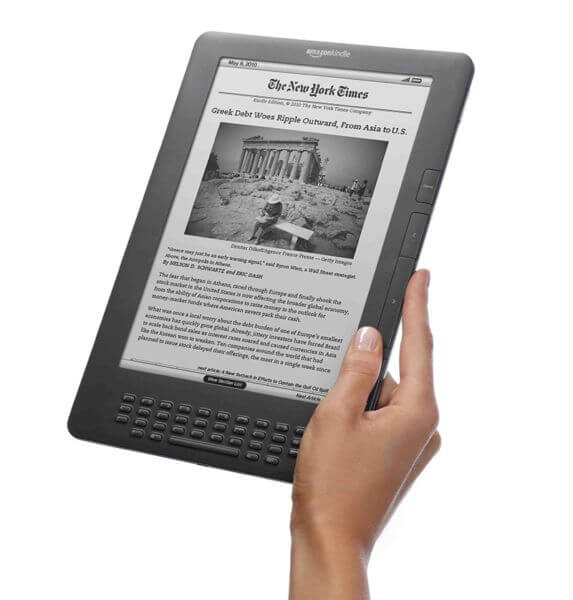
Common e-book formats
There are many e-book formats, and each of them has its own characteristics.
- EPUB (Electronic PUBlication) is an open e-book format supported by most devices. It can contain text, images, tables, audio and video files and supports built-in design elements such as fonts and text sizes.
- FB2 (FictionBook) is designed specially for storing fiction. It uses XML markup to store the data and allows images, footnotes, hyperlinks and other elements to be included. FB2 is one of the most common formats today.
- MOBI was created specifically for the Amazon Kindle. It uses data compression to reduce the size of the book and supports built-in design elements.
- KF8 (Kindle Format 8) is a newer e-book format developed for the latest models of Amazon Kindle. It supports a wider range of built-in design elements such as text colour, background and images.
- AZW is used on Amazon Kindle devices. It is very similar to MOBI but supports a wider range of built-in design elements.
- LRF was developed by Sony. It supports built-in design elements such as tables and images and can be used on Sony Reader devices.
- TXT is a plain text format that contains only text, without images or formatting. It is well suited to simple text documents that do not need complex markup or visual effects.
- PDF (Portable Document Format) preserves the original appearance and markup of a document, including images, graphics and formatting. It is most often used for documents that have to look exactly like the original – scientific articles, manuals and brochures.
- DOC and DOCX are formats created by Microsoft Word for writing and editing text documents. DOC is the older format and DOCX the more modern one, but both can be read on most devices with Microsoft Word installed.
Kindle book formats and sizes for Amazon
The Kindle is an e-reader developed by Amazon. The device quickly became popular and is today one of the most common ways of reading books. Kindle books have their own particular features, so it is worth knowing which format and size of book suits the device.
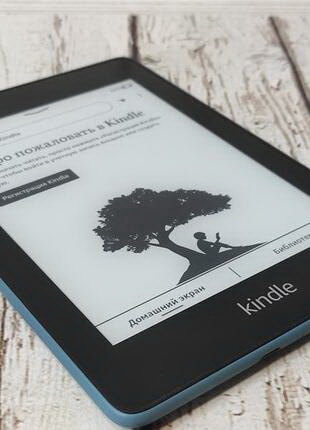
The main Kindle book format is MOBI (Mobipocket). It was designed for reading e-books on mobile devices, including the Kindle, and it supports features such as:
- bookmarks;
- text selection;
- search;
- automatic translation of words.
Books for the Kindle have to be in one of the following formats:
- MOBI;
- AZW;
- KF8.
AZW is a format developed by Amazon for use only on the Kindle. KF8 is a newer format that supports higher image and video quality. Not every book is available in MOBI format, and in that case you need a converter, such as Calibre, to change the format of the book.
The size of Kindle books also matters. It should be optimised for the Kindle to give the best possible reading experience, because some books have a font size or images that are too small and are hard to read on the device.
There are several sizes that suit the Kindle:
- 6 inches (15.2 cm) is the standard size and the most popular one;
- 7 inches (17.8 cm) has a larger screen, which makes it more suitable for reading magazines and comics;
- 10 inches (25.4 cm) is the largest size and suits graphic novels and other books with a lot of images.
Knowing which size and format of book suits your Kindle helps you get the best reading experience. And although MOBI is the main format, there are other formats that can also be read on the Kindle.
What's included in the service
Hardcover
Hardcover books are made for durable, long-lasting use. The cover is made of cardboard or thick board covered with cloth, film or paper, and the pages are sewn or glued into the spine, which gives the book strength. They cost more than the other options and are often chosen for special editions or for books with a long shelf life.
Softcover
Paperbacks are a cheaper and more portable alternative to hardcover books. They are usually printed on thinner paper and have a soft cover of card. There are two main kinds - the trade paperback and the mass market paperback.
Board book for children
Board books are made for children who are learning to read. They are produced from thick cardboard whose pages are difficult to tear, and are often covered with a soft padded material.
Graphic novel
Graphic novels are a kind of comic that tells a longer and more complex story. They are printed on higher quality paper and have a sturdier cover than traditional comics.
Workflow
Preparation of the layout
Before contacting a publishing house you need to prepare the file of your book. Depending on your experience you can edit and design it yourself or turn to professional editors and proofreaders. You also need a cover design if you want the book to look professional.
Choosing a printing house
When the layout is ready you choose the printing house that will print the book. It can be a local printer close to where you live or an online one. Our online printing house offers a wide range of options and services, and customer reviews confirm that we are reliable.
Providing the information
Once you have chosen a printing house you give it everything it needs: the text of the book, the cover design, the number of pages and the required size. You can also discuss additional options such as the quality of the paper, the type of binding, the printing method and extra services.
Payment and printing
When all the information has been provided, the printing house calculates the cost of printing your book and lets you know. After you agree to the terms and the price you pay for the order, and as soon as the payment arrives the printing house starts to print the book.
Ready to get started?
Submit your request - a manager will contact you within the day with a detailed quote.